Two Unique Exercises, Three Common Lessons
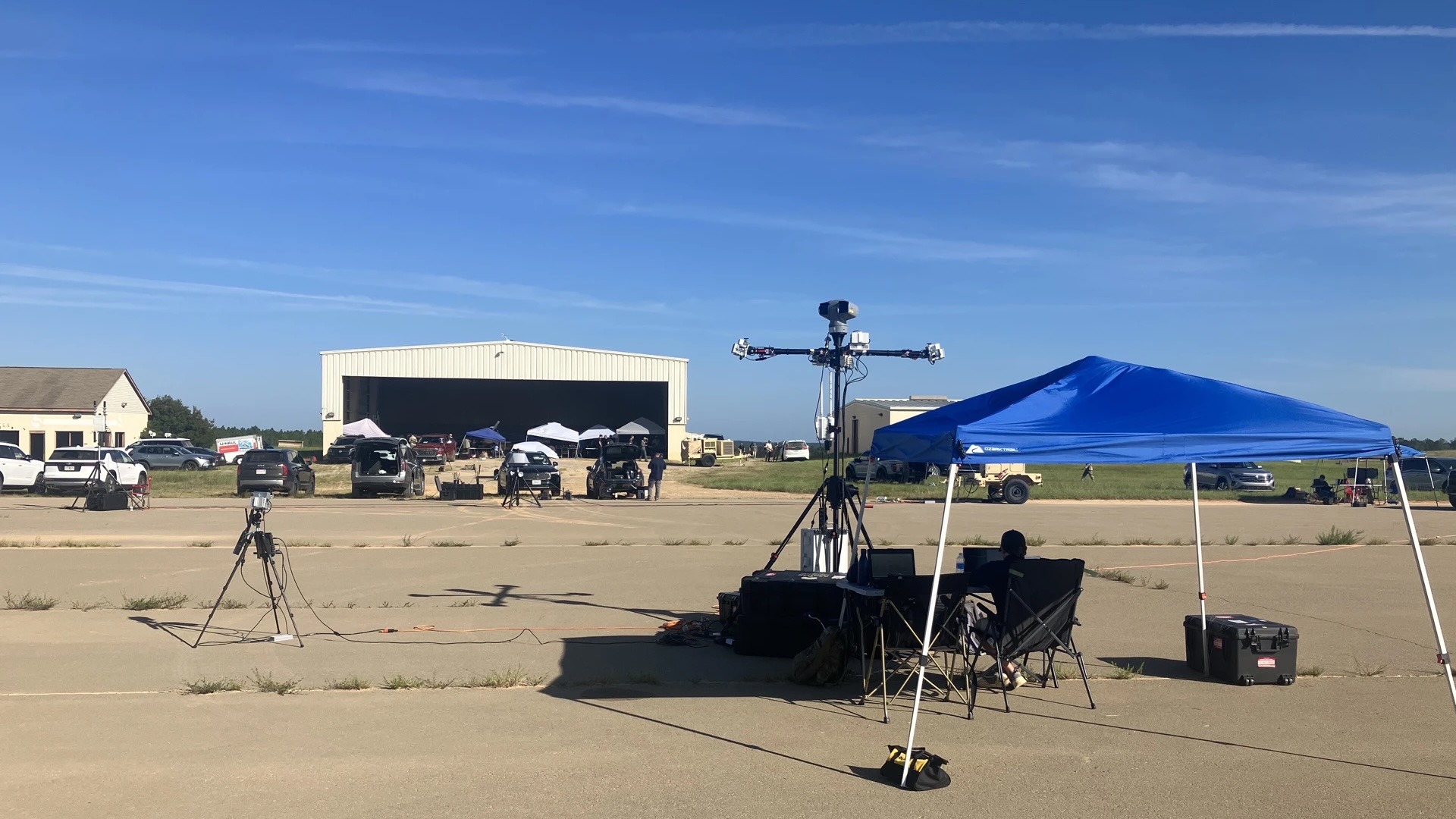
The counter-drone problem looks very different depending on where you stand.
For a soldier operating at the tactical edge, the threat may be a fast-moving FPV drone approaching through terrain and clutter, an RF-dark aircraft controlled by fiber optic cable, or dozens of drones arriving at once. For a public safety agency, the challenge may be understanding what is in the airspace above a major event, critical infrastructure site, correctional facility, or emergency scene—and determining which technology can be trusted before investing limited resources.
Over the past several weeks, MatrixSpace participated in two field exercises built around those very different missions: Scarlet Dragon, led by the U.S. Army’s XVIII Airborne Corps, and the Guardian Skies Summit, hosted at Camp Grayling by the Michigan Drone Association in partnership with DRONERESPONDERS.
The audiences, missions and operating environments were very different. The lessons were remarkably similar.
Scarlet Dragon: Training for the Drone-Saturated Battlefield
Scarlet Dragon provided a look at how quickly Army counter-UAS concepts of operation are evolving around lessons from current conflicts.
Rather than flying simple demonstration profiles, the exercise exposed sensing and command systems to scenarios reflecting modern UAS tactics: high-speed FPVs, low-altitude approaches, RF-silent aircraft, higher-altitude ISR, mothership concepts and large swarms.
That matters because each tactic is designed, intentionally or otherwise, to exploit the weakness of a particular detection method. A drone flying extremely low creates a different sensing problem than one operating at altitude. A fiber-optic FPV removes the RF signature on which passive detection systems depend. A swarm stresses not just detection, but tracking, fusion and an operator’s ability to make sense of many simultaneous objects.
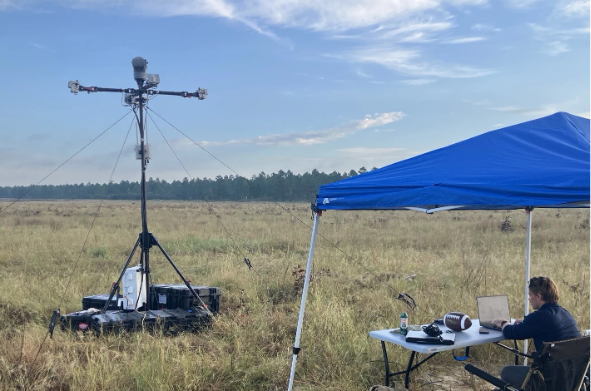
The result is an increasingly clear conclusion: counter-UAS is no longer a single-sensor problem. It demands effective multi-sensor fusion technology to drive operator action and mitigation automation.
Scarlet Dragon also reinforced another shift. The Army is thinking less about individual sensors operating as standalone products at the rear echelon and more about how information moves across a distributed force. Sensors were expected to contribute data into multiple command-and-control environments rather than require users to adopt a proprietary architecture.
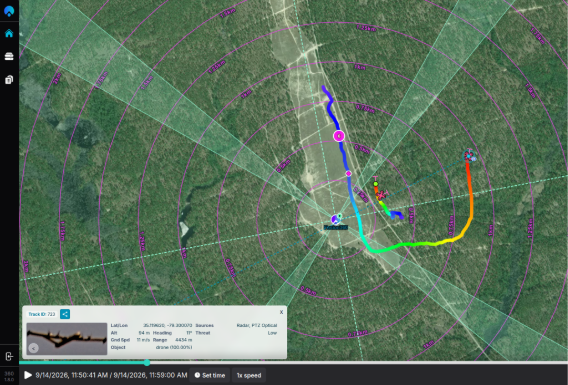
That aligns with what MatrixSpace’s Peter Jones and Robert Alger recently described as “building the onion”: a resilient defense built from multiple sensing layers rather than expecting any one product to solve the entire problem. Adversaries continuously adapt around defensive technologies, making radar, RF and other sensing modalities more valuable when they operate together and fuse information at the edge.
Just as important, openness becomes part of tactical agility. Scarlet Dragon reinforced that adaptable architecture and local processing can matter as much as the performance of an individual sensor—particularly when communications are constrained or different C2 systems must consume the same information. Once again MatrixSpace conformed with the Army’s openness pattern, as we had at Operations Jailbreak and Flytrap 5.0.
Guardian Skies: A Different Path for Public Safety
Guardian Skies addressed the same technology challenge from a very different direction.
State and local law-enforcement agencies do not acquire counter-UAS capabilities the way the military does. Most do not have dedicated test organizations, large acquisition staffs or years of operational experience evaluating radar, RF, optical and mitigation technologies.
Yet they are increasingly being asked to make consequential decisions about airspace security.
Guardian Skies was designed to help close that gap.

Hosted at Camp Grayling by the Michigan Drone Association and DRONERESPONDERS, the event brought public-safety stakeholders together with counter-UAS vendors for live detection and mitigation demonstrations against realistic drone profiles. Its stated objective was to give agencies an opportunity to see systems operating in a controlled, real-world environment before making significant technology investments.
That model is important.
Organizations such as the Michigan Drone Association and DRONERESPONDERS can provide a bridge between industry and agencies that need to understand a rapidly changing technology landscape. Instead of evaluating systems primarily through specifications, agencies can observe them in operation, compare approaches and begin developing the knowledge required to build effective programs.
Three Lessons Across Two Missions
Despite their differences, Scarlet Dragon and Guardian Skies reinforced three principles we believe will shape counter-UAS systems going forward.
First, no single sensor solves the problem. Radar, RF, Remote ID, optical and other technologies each see different aspects of the airspace. Layering them creates a more complete picture and reduces dependence on any single sensing modality.
Second, openness is paramount. On the battlefield, sensor data must flow into command-and-control systems at multiple echelons. In public safety, airspace information may need to support real-time crime centers, incident command, drone operations and other agency systems. The technology cannot become another isolated screen.
Third, everything must be resilient. Threats, tactics, networks and operating environments will continue to change. Systems built around rigid architectures or a single method of detection risk becoming obsolete as quickly as the threat evolves.
The military and public safety communities may be approaching counter-UAS from different starting points, but they are converging on the same architecture: layered sensing, open integration and resilient operation.
That is increasingly what effective airspace awareness looks like for defense and public safety guardians.
Keep Reading
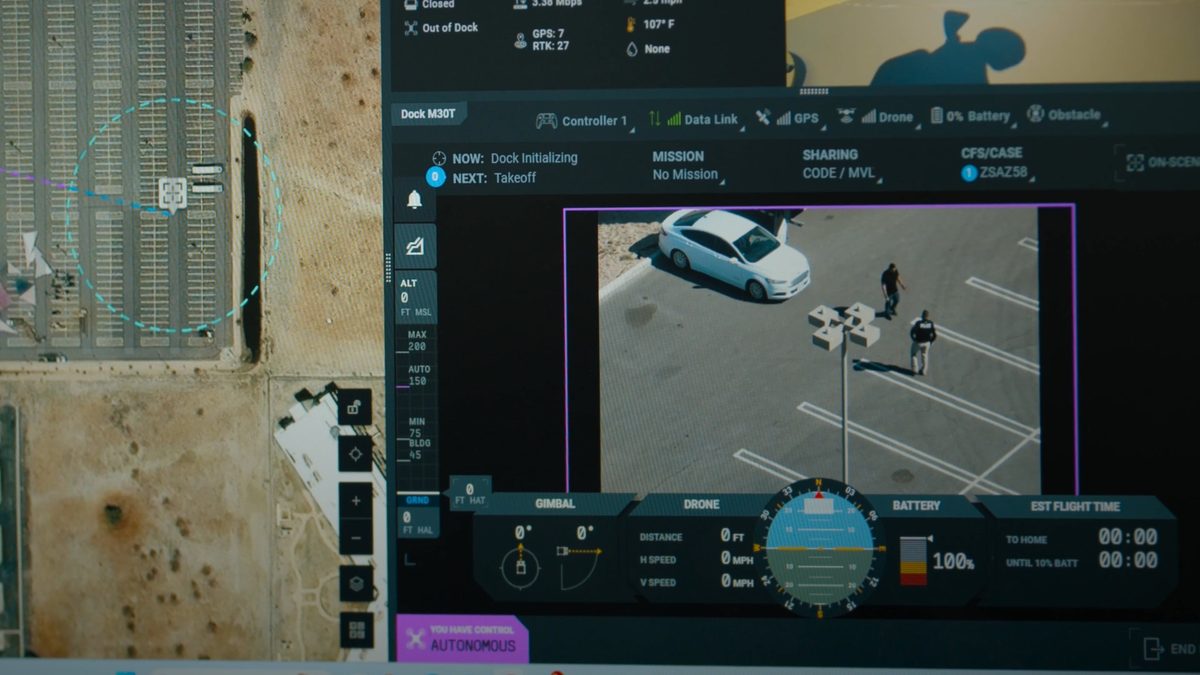
The rule gives SLTT agencies real counter-UAS authority for the first time. It also places data squarely at the center of that authority. For technology providers building the systems agencies will actually use, that data architecture is where compliance either works in practice or breaks down.
.jpeg)
MatrixSpace demonstrated portable, resilient counter-drone capabilities at the U.S. Army’s Flytrap 5.0 exercise, integrating mobile radar and AI systems with Anduril’s battle command network. The deployment validated effective small-drone detection, operation in contested environments, rapid dismounted deployment, and interoperability through open architectures for modern battlefield airspace awareness.

Rising drone threats are driving organizations to adopt systems that detect, track, and identify them. Effective defense requires layered, multi-sensor approaches, with radar as the backbone for real-time threat assessment.