Observations from Project Flytrap 5.0
.jpeg)
Today’s battlefields have exposed new vulnerabilities to soldiers and light vehicles operating well ahead of traditional exquisite air and missile defense assets1. Traditional radar detection systems are unable to see the small, close-in drones and loitering munitions that represent the real threat in today’s conflicts.
Project Flytrap is the U.S. Army’s battlefield exercise program dedicated to proving technologies, and establishing tactics, techniques and procedures (TTPs) for both the use of drones and defense against adversarial drones.
MatrixSpace participated in Project Flytrap 5.0, partnering with US and allied front line teams. Our goal was to improve their capabilities in highly contested drone and electronic-warfare saturated battle scenarios. Flytrap 5.0 brought together U.S. and U.K. front line forces and more than 50 industry-provided technologies, all networked across a combined a combined U.S.-U.K. tactical data architecture and tested against a live opposing force.2
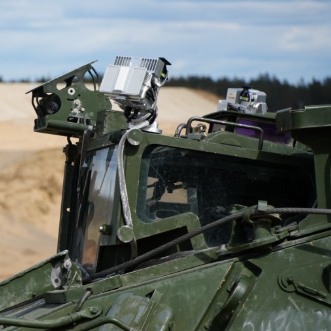
In less than a month, MatrixSpace engineers augmented MatrixSpace Radar and AiEdge systems to operate on the halt. Specifically, MXS integrated an inertial navigation system (INS) and custom software to align to Army concept of operations. At the event MatrixSpace integrated two radars onto the Stryker platform to provide C-UAS detection for forward-deployed platoons. Fully integrated into the Anduril Lattice Integrated Battle Command System-Maneuver (IBCS-M), MatrixSpace detection events and tracks were used to help soldiers and command teams identify threats and take action to manage or mitigate them. This provided a crucial layer of close airspace awareness—within 1 km, where legacy radar systems are blind to small, low-altitude drones—complementing the traditional Maneuver Short-Range Air Defense (M-SHORAD) systems.
Lessons Learned
As proven by our xTechCounter Strike win at Project Flytrap 4.5, the ultra-low C-SWaP of MatrixSpace radar systems again demonstrated tremendous advantage for tactical use in the field at the platoon level. Key lessons learned:
Resilience
In a highly contested electronic-warfare environment, local mesh network continuity cannot be guaranteed. When connectivity failed during exercises, MatrixSpace systems continued operating locally with full detect, track, and identify capability. MatrixSpace AiEdge software provided a tablet-based user interface for operators in the Stryker vehicle, allowing them to stay in the fight longer and have direct battlefield awareness so they could react in real time rather than wait for a directive.
Power
Power also proved to be unreliable in the field. Stryker vehicles power down often to prevent detection of thermal and acoustic signature during maneuvers, and onboard reserve batteries drain long before operations complete. While other systems simply shut down, MatrixSpace sensors continued operating on a commercial (COTS) battery system independent of vehicle power.
Portability
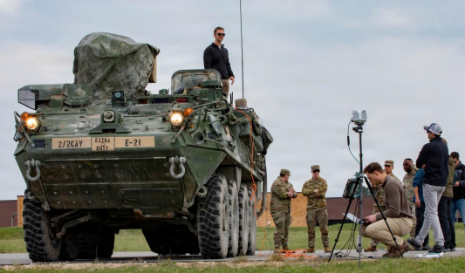
To minimize exposure to drones and other threats, Stryker teams often conceal in close tree canopy which occludes radar line-of-sight. Troops also need a dismountable sensor system that can separate from the vehicle and provide clean situational awareness. MatrixSpace demonstrated the ability to stand up a dismounted Expeditionary Kit in 5 minutes.
Agility and Openness
Bespoke, exquisite systems are no longer acceptable approaches for the U.S. Army, which has now mandated that operational technologies use open architectures to expedite interoperability with each other and the branch’s command systems.3 Anduril’s IBCS-M platform is the new command framework for the distributed battlefield. Anduril “expected third-party sensor and effector providers to integrate their systems in real time versus the weeks to months a closed C2 layer would require.”4 Due to its natively open architecture, MatrixSpace’s sensor system integration was one of the first validated by Anduril in the field.
Continuous Improvement
Our deployment at Flytrap 5.0 once again validated the value of MatrixSpace technology for complex C-UAS operations in difficult environments. Learnings from both successful performance and failures are already being converted into innovation across our hardware and software teams.
Flytrap 5.0 confirmed that protected mobility is the critical success factor for modern ground conflict. While MatrixSpace provides the most portable, affordable and easy-to-use C-UAS detections systems available, actionable intelligence on the move will unlock convincing advantage for our defenders. Watch this space!
- Directive report language: "Special Items of Interest", House Armed Services Committee Subcommittee on Tactical Air and Land Forces, H.R.8800: https://armedservices.house.gov/uploadedfiles/fy27_ndaa_tal_print_-_final.pdf
- "Defeating the swarm: Project Flytrap accelerates NATO’s counter-drone lethality”, Sgt.Max Elliot, U.S. Army, 18-May 2026: https://www.army.mil/article/292622/defeating_the_swarm_project_flytrap_accelerates_natos_counter_drone_lethality
- “US Army Kicks Off ‘Right to Integrate’ Hackathon”, Erin O’Brien, Tectonic, 11-May2026: https://www.tectonicdefense.com/us-army-kicks-off-right-to-integrate-hackathon/
- “Gaps In Army’s Tactical Counter-Drone Capabilities Remain Concern Of HASC”, Cal Biesecker, Defense Daily, 27-May 2026: https://www.defensedaily.com/gaps-in-armys-tactical-counter-drone-capabilities-remain-concern-of-hasc/congress/
Keep Reading
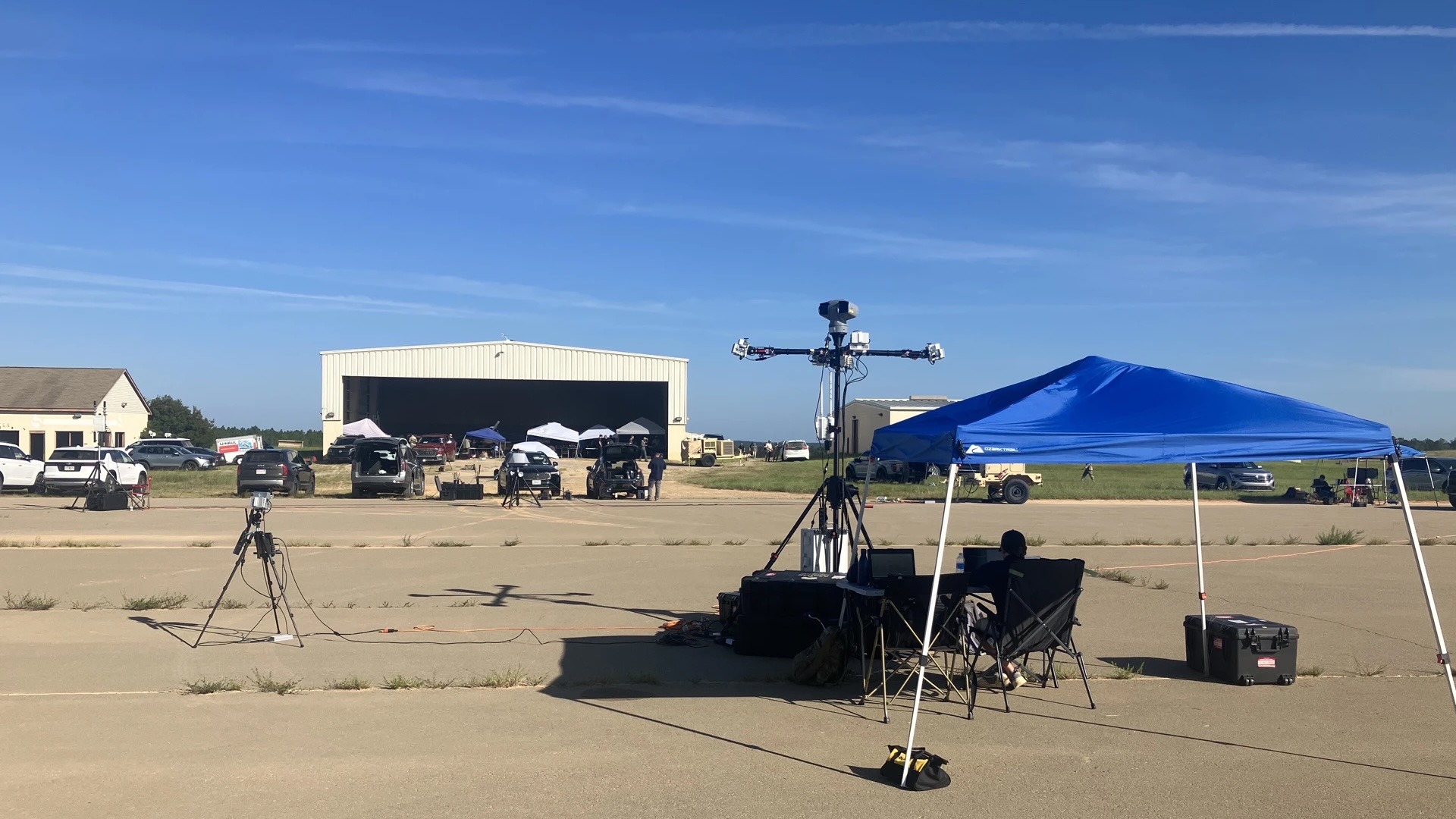
MatrixSpace participated in two field exercises built around two different mission-sets. The lessons from Scarlet Dragon and Guardian Skies were remarkably similar.
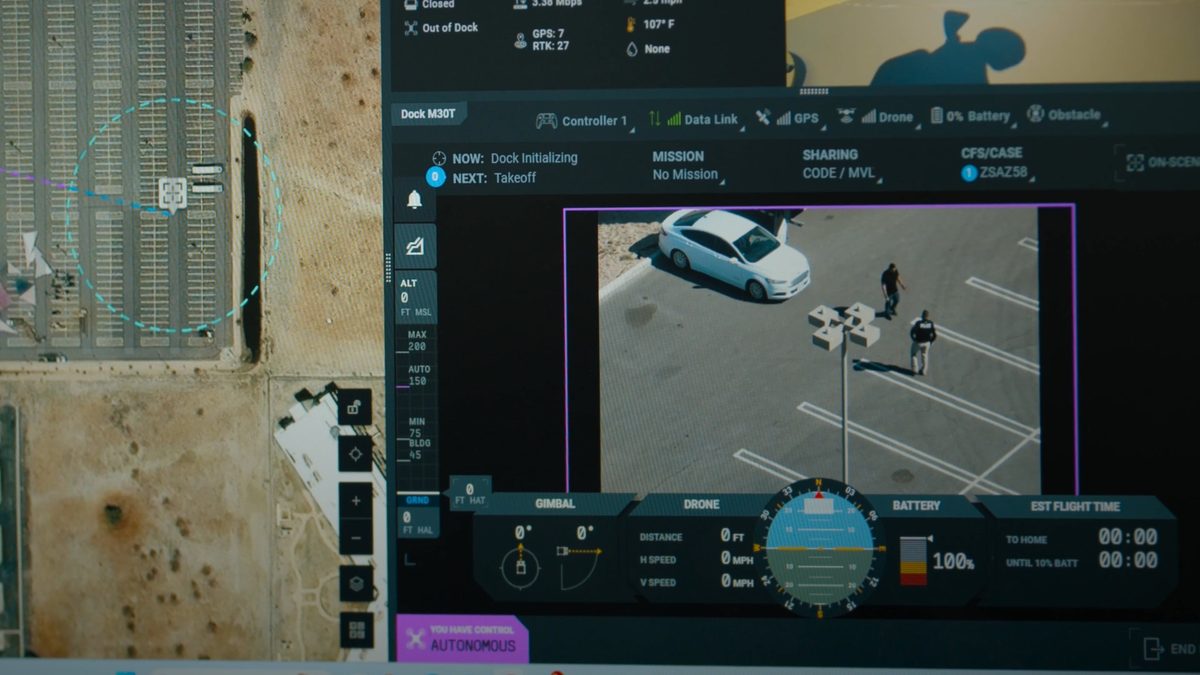
The rule gives SLTT agencies real counter-UAS authority for the first time. It also places data squarely at the center of that authority. For technology providers building the systems agencies will actually use, that data architecture is where compliance either works in practice or breaks down.
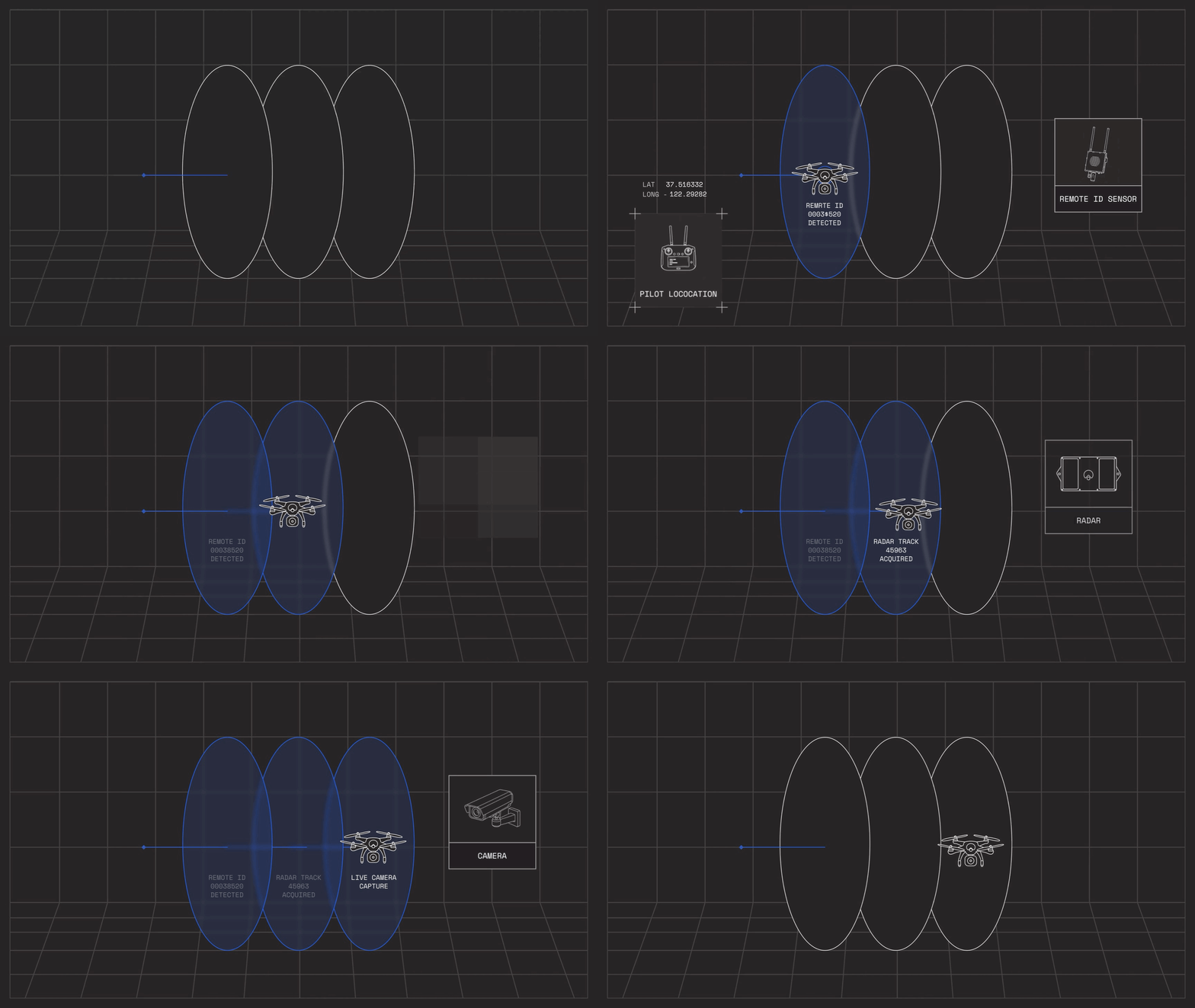
Rising drone threats are driving organizations to adopt systems that detect, track, and identify them. Effective defense requires layered, multi-sensor approaches, with radar as the backbone for real-time threat assessment.